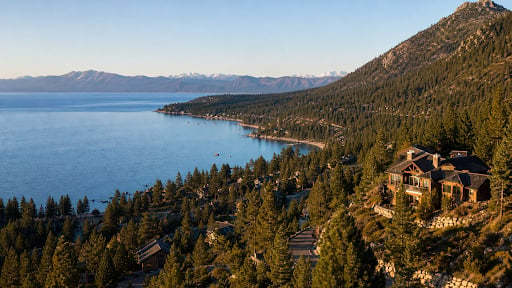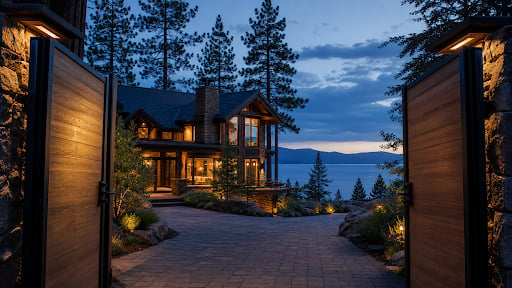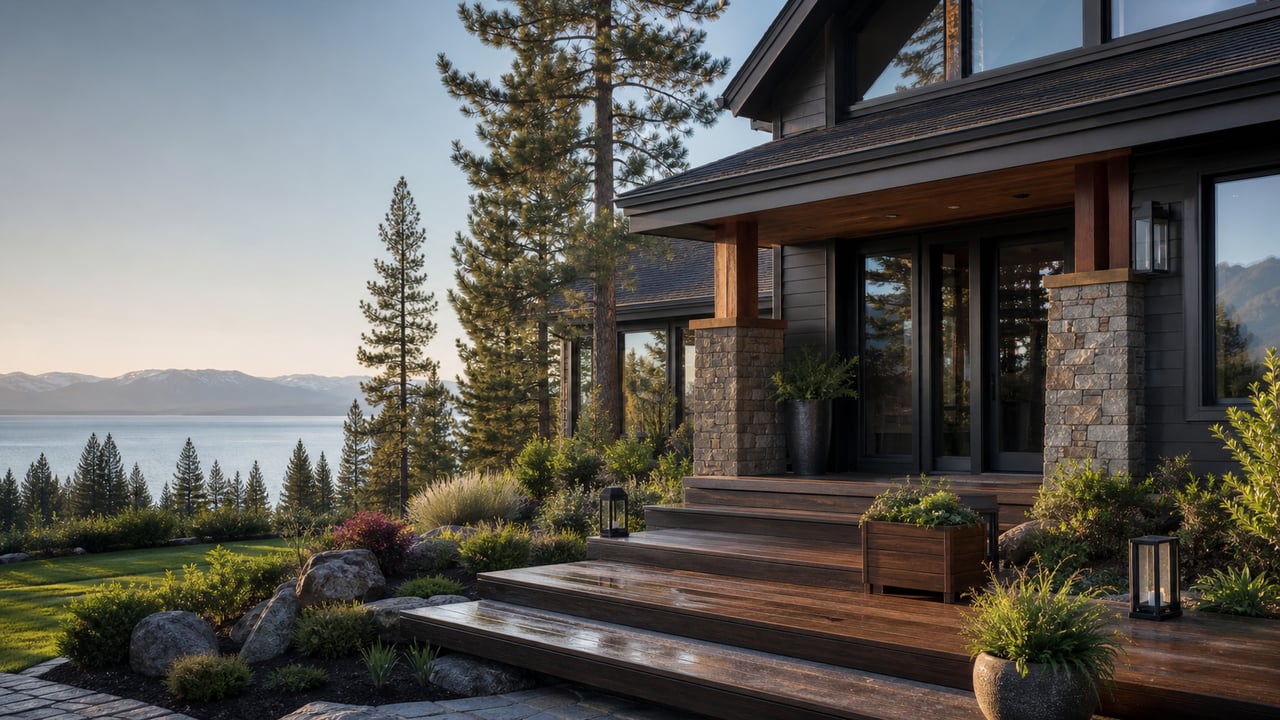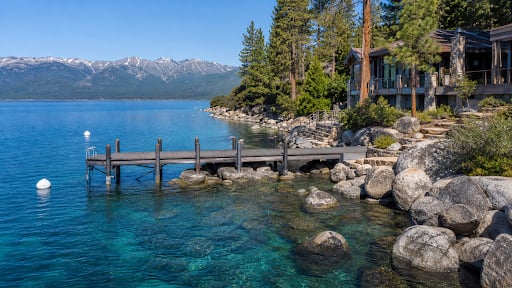
Lake Tahoe lakefront homes are among the most limited and emotionally compelling properties in the region. The shoreline, water clarity, views, and ability to move directly from the house to the lake can be impossible to replicate.
That scarcity makes careful due diligence even more important.
Two homes can appear similar in photographs while offering very different ownership experiences. One may include a permitted pier and privately permitted buoys. Another may rely on shared association access, buoy allocation, a nearby marina, or rights that are subject to separate rules and availability.
The right question is not simply, “Is this lakefront?” It is, “Exactly what comes with this property, and how can it be used?”
Confirm the Shoreline and Title
Begin with the legal description, survey, preliminary title report, and any recorded easements or agreements. Buyers should understand where the parcel ends, whether access crosses another property, and whether neighboring structures, paths, utilities, or shoreline improvements affect the site.
Historic Tahoe properties can have longstanding patterns of use that do not necessarily match recorded rights. A survey and title review can help distinguish what is visible from what is legally conveyed.
Verify the Pier, Buoy, and Mooring Rights
Never assume that a pier, buoy, boat lift, or mooring shown with a property is automatically permitted, transferable, private, or available for the buyer's use.
Ask for the relevant permits, registrations, association documents, allocation rules, and maintenance agreements. Confirm whether a buoy is privately permitted, assigned through an HOA, rented seasonally, or subject to a lottery or waitlist.
Tahoe shoreline structures and moorings may involve multiple public agencies and local jurisdictions. The Tahoe Regional Planning Agency provides shoreline and parcel resources, but buyers should also consult the appropriate title, legal, permitting, and inspection professionals for the specific property.
Understand Access in Real Conditions
Lake levels, wind exposure, water depth, shoreline material, and seasonal weather can change how a property functions.
A pier that looks ideal in one season may have depth limitations in another. A buoy may be exposed to prevailing wind. Granite steps can be beautiful but challenging for some owners or guests. A sandy beach, protected cove, deep-water access, and straightforward kayak storage each create a different experience.
Visit the property from the water when possible. Ask how the shoreline performs during lower water, stronger wind, winter conditions, and peak summer use.
Review Insurance and Physical Risk Early
Insurance should not be left until the end of the transaction.
Buyers should obtain quotes early and ask about wildfire exposure, defensible-space requirements, roof and vegetation conditions, flood considerations, reconstruction limits, and the availability of coverage for accessory shoreline structures.
The home's drainage, retaining walls, erosion control, Best Management Practices, septic or sewer system, generators, winterization, and private utilities may also deserve specialized review.
Lakefront value is tied to the site, but the cost and complexity of caring for that site are part of ownership.
Know What Is Shared
Some properties include shared piers, beaches, paths, gates, roads, buoy fields, utility systems, or maintenance obligations.
Review the governing documents and current costs. Understand who manages repairs, how decisions are made, whether use is exclusive or shared, and what happens when major work is required.
If access comes through an association or optional membership, verify eligibility for the specific parcel and whether the right transfers automatically with the sale.
Consider Privacy Beyond the Property Line
Lakefront privacy is shaped by more than lot size.
Public beaches, trails, neighboring piers, boat traffic, HOA access points, road placement, and the orientation of outdoor living areas all influence how the property feels. Buyers should evaluate the home on a busy summer day, not only during a quiet showing.
Work Backward From the Life You Want
The best lakefront property is not always the one with the longest feature list.
Some buyers want a low-maintenance base with easy marina access. Others want a private pier, protected swimming, multigenerational space, or enough shoreline infrastructure to spend every day on the water.
Define the intended use first. Then verify that the rights, physical setting, and ownership obligations support it.
Frequently Asked Questions
Does every Tahoe lakefront home include a private pier or buoy?
No. Pier, buoy, beach, and mooring arrangements vary significantly. Rights may be private, shared, association-based, rented, assigned, or unavailable. Verify the documentation for the specific property.
Are Tahoe buoy permits transferable with a sale?
Transfer and continued use depend on the permit, registration, agency requirements, and property. Buyers should review the documentation and confirm the current rules with qualified professionals and the relevant agencies.
What inspections are important for a lakefront home?
In addition to a general home inspection, a buyer may need specialists for shoreline structures, sewer or septic, drainage, retaining walls, roofing, defensible space, generators, docks, and other property-specific systems.
When should a buyer investigate insurance?
As early as possible. Availability, price, exclusions, and required mitigation can affect both the transaction and the long-term cost of ownership.
Suggested Internal Links
Available properties: https://teamblairtahoe.com/properties/sale
North Lake Tahoe guide: https://teamblairtahoe.com/neighborhoods/north-lake-tahoe
Team Blair Tahoe homepage: https://teamblairtahoe.com/
Official Resources
Tahoe Regional Planning Agency: https://www.trpa.gov/
Lake Tahoe Info Parcel Tracker: https://laketahoeinfo.org/
Ready for Wildfire: https://readyforwildfire.org/
Call to Action
Looking at lakefront property around Lake Tahoe? Team Blair Tahoe can help you compare not only the homes, but the shoreline rights, access, exposure, and ownership details that shape long-term value.
Informational Note: This article is for general information only. Buyers should consult qualified legal, title, insurance, inspection, tax, and permitting professionals regarding a specific property.
 Explore Additional Insights and Articles