When “Lakefront†Means Across the Street
The word gets used as if it has one meaning. On the North Shore, it does not.
True lakefront means the lot has a direct relationship to the water. Frontage. Shorezone. A path that belongs with the parcel, or a pier or buoy situation that can be understood and verified.
That is a different asset from a house with a lake view, and a different asset from a house with access to a beach.
Lakefront, Lake Access, and Lakeview Are Not the Same
Lakeview is a window. Lake access is a right or a practical way to reach the water, such as a path, HOA beach, or public stretch you will actually use. Lakefront means the parcel itself has a direct relationship to the shoreline.
Pricing, insurance, TRPA considerations, and the daily use of the property can all change when the lot actually touches the lake.
If the listing uses the strongest word, ask what the parcel touches.
Across the Street Can Still Be a Great House
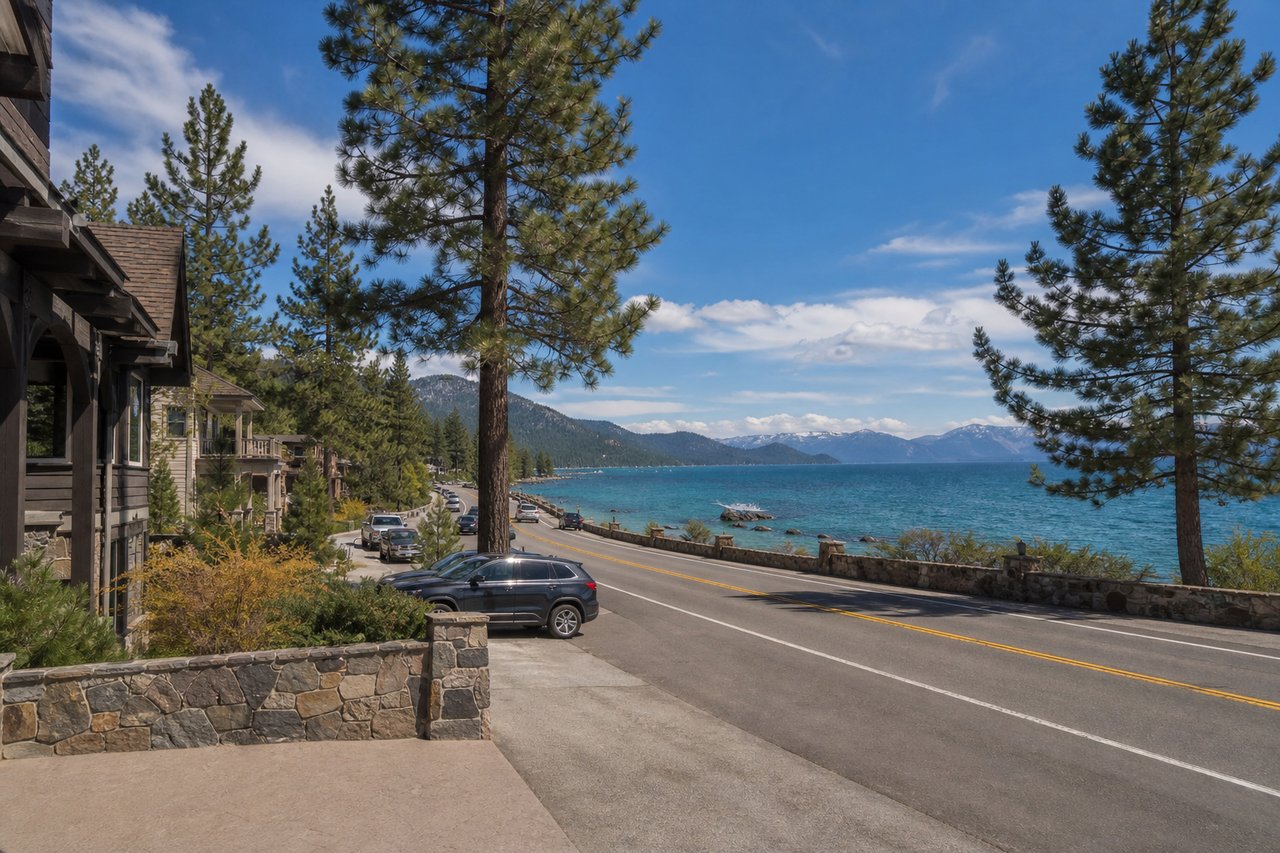
Plenty of North Shore homes sit across North Lake Boulevard or another road with the lake filling the windows.
That can be a wonderful way to live. You get the light. You get the water in your day. You may have an easy walk to the beach.
You do not get lakefront. You get a house across the street from the lake.
That should be clear in the first conversation, not explained after you have already told your family you bought lakefront.
Shared Beach Access Is Its Own Product
Dollar Point, Agate Bay, and other neighborhoods have their own versions of shared beach access through an HOA or community.
For many families, that is exactly enough. You can have meaningful lake access without taking on the cost, maintenance, and shorezone questions that come with true frontage.
It is not the same as walking from your deck onto your own shoreline. It does not need to be.
Do Not Crop 28 Out of the Decision
In July, 28 can mean traffic noise, a crossing, and a Saturday schedule that does not care about yours. In January, it means plows, ice, and a walk to the water you may not take at all.
Listing photography can frame the lake beautifully while taking the lanes out of the story.
Stand outside at 4 p.m. on a Friday in August and listen. Pretending the road is a footnote is not useful.
Ask What Comes With the Water
If a property is represented as lakefront, ask direct questions.
Who owns the strip between the house and the water? Is there a buoy, and what is its current status? Is there a pier, and what permits or records apply? Are TRPA, State Lands, or other shorezone matters already documented?
Any legal, permitting, insurance, or ownership conclusions should be verified with the appropriate professionals and agencies.
Sometimes Across the Street Is the Smarter Buy
You may not want pier maintenance, shorezone process, or the insurance considerations that can come with being directly on the water.
You may want a house that looks at the lake, uses a community beach in summer, and is simpler to own. That can be a very clean decision when you name it correctly.
Team Blair will use the word that is true. If the house is across the street, we will call it that. If it is true lakefront, we will treat the water rights, permits, and shorezone questions as part of the first conversation, not a surprise in escrow.
Frequently Asked Questions
Is a house across 28 from the water lakefront?
No. You may get the light, the view, and the water in your day, but the house is still across the street from the lake. Ask what the parcel actually touches.
What is the difference between lakeview, lake access, and lakefront?
Lakeview is a window. Lake access is a right or a practical way to reach the water, such as a path, HOA beach, or public stretch you use. Lakefront means the parcel itself has a direct relationship to the shoreline.
Is a Dollar Point or Agate Bay beach the same as frontage?
No. Shared beach access through an HOA or community is its own product. For many families, it is enough. It is not the same as walking from your deck onto your own shoreline.
If the listing says lakefront, what should I ask first?
Ask what the parcel actually touches and who owns the strip between the house and the water. Ask about the status of any buoy, the records and permits associated with a pier, and whether State Lands and TRPA matters are documented. Then walk the shoulder.
Call to Action
If a listing says lakefront, ask Team Blair what the lot actually touches before you make the drive. We will walk the shoulder, the path, and the paper with you, and we will not let a wide-angle photograph do the defining.
Team Blair Tahoe / Jamison Blair
 Explore Additional Insights and Articles