What “Turnkey” Means in a Mountain House
In the Bay Area, turnkey can mean fresh paint, staging, and a kitchen that photographs well.
In Tahoe, it means you can arrive on a Friday night in a storm and the house works.
A furnished great room is not the test. Heat, water, snow, power, and the way the house has been maintained through winter are the test.
Plenty of North Shore listings use the word because the sofa is included and the dishes are in the cabinet. That is a start. It is not turnkey.
Start With the Heat
Look past the decorative fireplace. The actual heating system matters, whether it is a boiler, radiant heat, a furnace, or another setup.
Ask how it has been maintained. Ask when it was last serviced. Ask whether the sellers actually used the house in January. Then ask what happens when the power goes out.
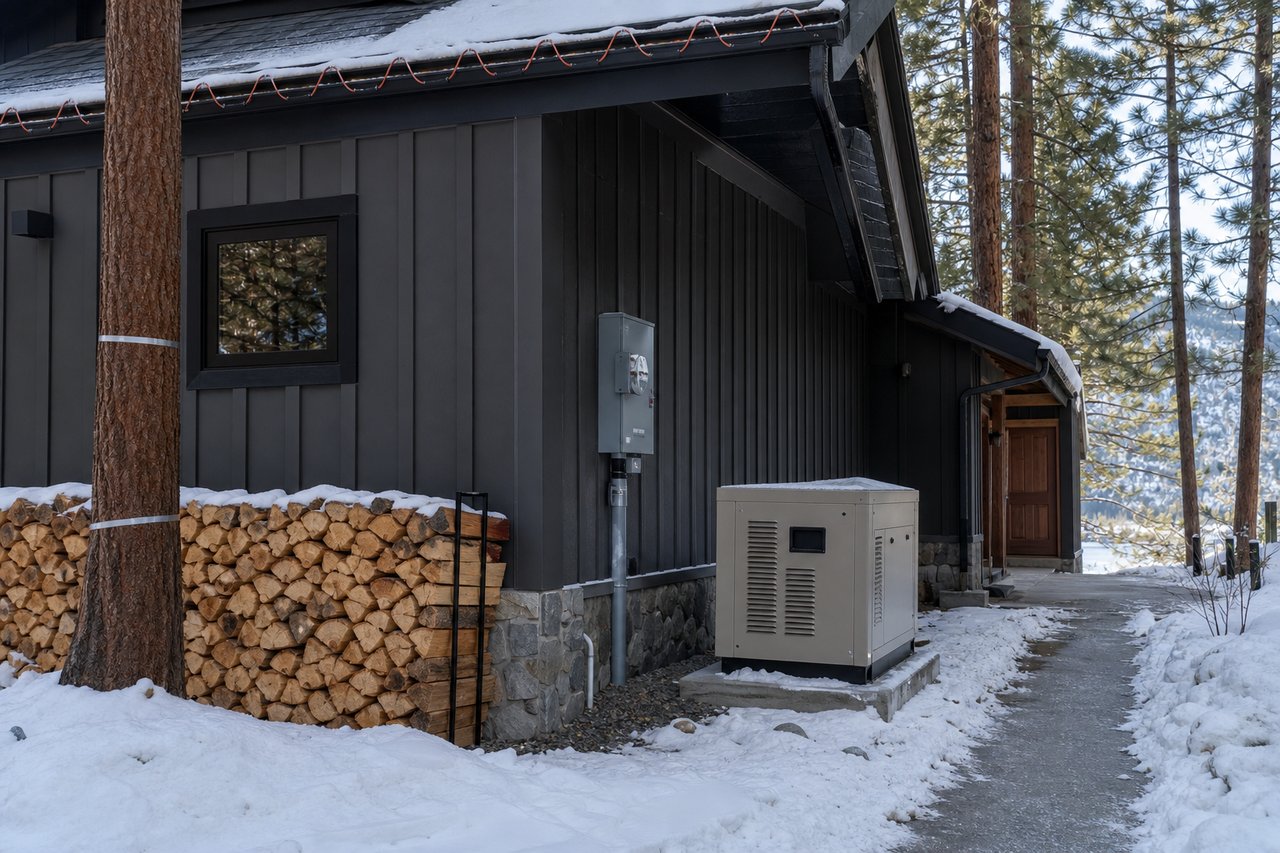
A generator can be an important part of a mountain house, but the right backup plan depends on the property and should be evaluated with the appropriate professionals.
A new thermostat does not make a house four-season. If the property has been closed from October to June, understand what needs to happen before you can use it differently.
Water Is Part of the Ownership Picture
Is the property on municipal water or a well? Has the house historically been winterized? What needs to happen if you arrive after a long cold stretch?
Water, sewer, and septic systems each bring their own maintenance considerations. If changes or additions are part of your plan, bring in the right inspectors, contractors, and permitting professionals early.
The question is not simply whether water comes out of the faucet during a showing. It is how the system has been operated and maintained through winter.
Snow Is a System, Not a Brochure Line
Snow means a driveway plan.
Who plows? Where does the snow go? Is there room for the berm the plow leaves behind? What do the last hundred feet feel like after a real storm?
A steep, shaded driveway with no easy turnaround is a different ownership picture from a flatter, sunnier approach with room to stack snow. The roof, gutters, drainage, and any heat-tape systems deserve attention too.
If you cannot get from the car to the door without turning arrival into a project, the house is not turnkey for winter use.
Defensible Space Belongs in the Turnkey Conversation
A staged July listing can make it easy to focus on the deck and overlook the perimeter.
Walk it. Look at how the vegetation is being managed and whether obvious exterior work is waiting for the next owner.
California defensible-space requirements, insurance standards, and property-specific recommendations should be reviewed with the relevant professionals. Team Blair can help surface the questions, but final guidance belongs with the appropriate agencies, inspectors, and insurance professionals.
A turnkey house should not hand you an obvious exterior maintenance project as soon as escrow closes.
Furnishings Have to Survive Tahoe
Ski boots. Wet dogs. Sand. Kids. Friends who do not treat the sofa like a showroom.
Designer turnkey is less useful if every surface makes you nervous.
For a second home, the property should be comfortable enough that you can arrive and settle in. For a vacation rental, the furnishings and inventory need to hold up to regular turnover.
Included furniture has value only if it supports the way you will actually use the house.
Closed-Up Houses Tell You Things
Winter air is dry. Wood moves. A house that has been closed for long stretches may smell and behave differently from one that has been continuously heated and used.
Pay attention to the crawl space, boiler room, utility areas, and the quality of prior roof or drainage work.
Team Blair approaches the mechanical side of the property with the same curiosity we bring to the view. Inspectors, contractors, insurance professionals, and other specialists can then answer the questions that belong with them.
Turnkey Really Means Year-Round Usability
Can you use the house on a Thursday in February without calling a caretaker to unlock a process?
If the answer is yes, and the systems have been properly evaluated, you are looking at a stronger year-round ownership picture than a house that simply presents well in July.
If the answer is “it could be,” understand what has to happen first.
Team Blair will not let a staging package define the house. We ask how it behaves in a storm, who has been maintaining it, how the driveway works, and what you may still need to address before the first winter.
Frequently Asked Questions
What does turnkey mean for a Tahoe home?
For a year-round Tahoe home, turnkey should mean more than included furniture. Heat, water, snow access, backup planning, maintenance, and basic winter usability all matter.
Is a generator necessary for a Tahoe second home?
Not every property or owner has the same needs, but backup power is worth discussing for a home that will be used through winter. A qualified professional can help determine which plan or system makes sense for the specific house.
What should I look for in a Tahoe driveway?
Look at the slope, shade, turnaround space, snow storage, plow arrangements, and the last hundred feet. A driveway that feels easy in July may work very differently after a storm.
Does defensible space affect whether a home is turnkey?
It can. Walk the perimeter and review the specific property with the appropriate professionals rather than assuming a staged exterior means the work is complete.
Call to Action
Before you pay a premium for turnkey, walk the street, the driveway, and the mechanical spaces with Team Blair. We will help you understand what the house actually does in February, not just how it looks in July.
Team Blair Tahoe / Jamison Blair
 Explore Additional Insights and Articles