What if the version of Tahoe you have been picturing is quieter, more connected to the shoreline, and still deeply rooted in classic mountain character? If you are drawn to mornings near the lake, afternoons on the trail, and homes that feel shaped by the land rather than imposed on it, West Shore deserves a closer look. This stretch of Lake Tahoe offers a distinct rhythm that blends recreation, stewardship, and timeless design. Let’s take a closer look at what defines the classic West Shore Tahoe lifestyle.
West Shore Feels Like a Corridor
West Shore Lake Tahoe is not one single town. It is better understood as a chain of small communities along Highway 89, with places like Sunnyside, Homewood, and Tahoma forming recognizable centers along the route.
That setup shapes daily life in an important way. Instead of one concentrated downtown, you get a shoreline corridor where beaches, trail access, dining, ski access, and residential pockets unfold from north to south. The result is a lifestyle that feels scenic, spread out, and closely tied to the lake.
A major part of that connection is the Dianne Feinstein West Shore Tahoe Trail. The trail runs about 12 miles from Tahoe City to Meeks Bay and serves both recreation and transportation, giving you another way to move through the West Shore without relying only on the highway.
Seasonal transit also supports that connected feel. The West Shore shuttle serves stops including Granlibakken Resort, Sunnyside, Homewood Resort, and Tahoma, and TART Connect provides evening service. For many owners and visitors, that mix of trail and transit adds convenience without changing the laid-back character of the area.
Life Revolves Around Shoreline Access
The classic West Shore lifestyle starts with the lake, but shoreline access has always been a meaningful part of the conversation around Tahoe living. According to the Tahoe Conservancy, public shoreline access around the lake has expanded significantly over time, growing from 13.5 public miles in 1971 to 34 miles through acquisitions and beach restoration.
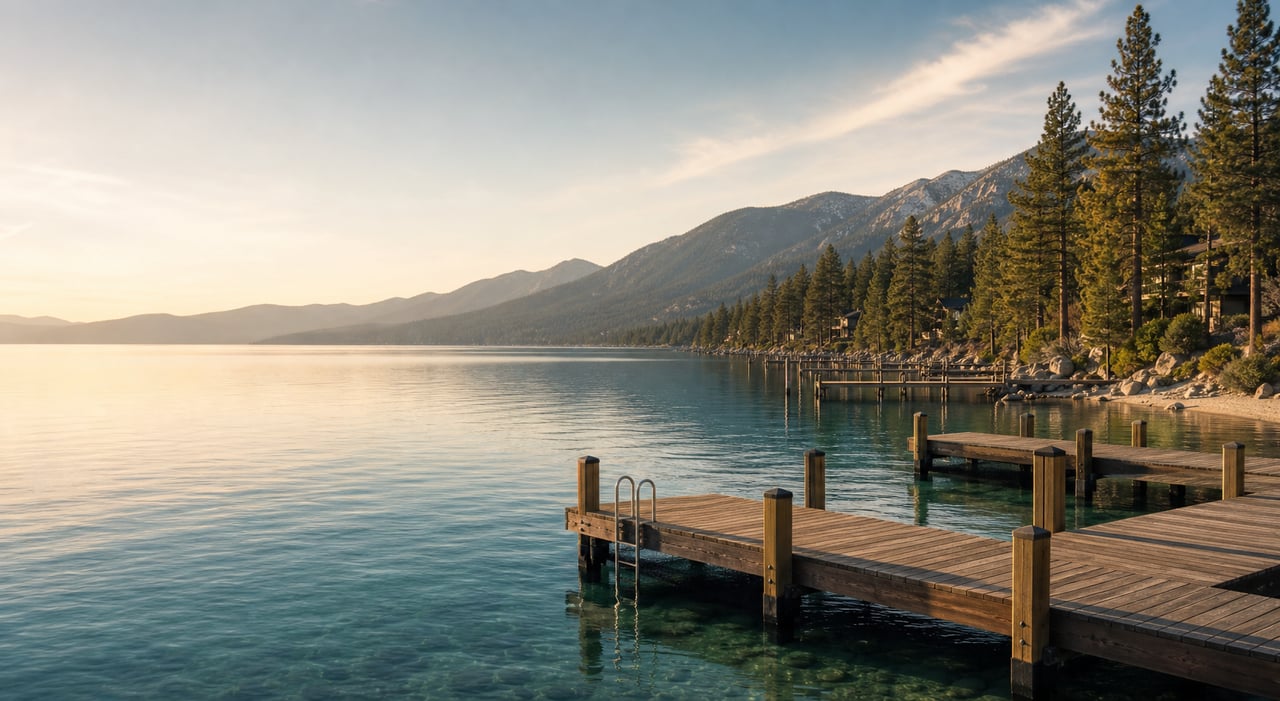
On the West Shore, that access shows up in a few memorable ways. Commons Beach in Tahoe City acts as a lakefront gathering point at the north end, while Sugar Pine Point State Park offers nearly 2 miles of lake frontage, beach access, and an accessible pier.
That combination helps create the area’s recognizable “pier culture” and shoreline lifestyle. You can spend time near the water, launch into a paddle day, or simply enjoy the lake as part of everyday life, but all of it exists within a closely managed environmental framework.
The Tahoe Regional Planning Agency regulates new piers, moorings, public boat ramps, and no-wake buffers around swimmers, paddlers, and shoreline structures. For buyers, that means the waterfront experience here is both desirable and carefully governed, which is an important part of understanding how West Shore functions.
Summer Energy, Winter Quiet
One reason West Shore feels so enduring is that it changes with the seasons without losing its identity. In summer, the shoreline is active, with beach access, marina activity in permitted areas, trail use, and long days centered around the lake.
In winter, the pace shifts. Sugar Pine Point State Park offers 11 miles of cross-country ski and snowshoe trails connected to the 1960 Olympic Nordic route, and the shoreline environment becomes calmer and more understated.
That seasonal change is a big part of the appeal. West Shore is not only about peak summer lake days. It is also about the quieter months, when snow-based recreation and slower park use shape a different kind of Tahoe experience.
Each West Shore Community Has Its Own Personality
Sunnyside Offers a Social Hub
Sunnyside stands out as one of the more mixed-use and active nodes on the West Shore. County planning language directs current and future uses toward visitors, and permitted uses in the village-center district include eating and drinking places, food retail, marinas, beach recreation, boat launching facilities, cross-country skiing courses, and riding and hiking trails.
In practical terms, Sunnyside often reads as one of the more social parts of the corridor. If you want a West Shore setting with easier access to activity, services, and a lively seasonal atmosphere, this area tends to represent that side of the lifestyle.
Tahoe Pines Feels More Residential
Tahoe Pines, located about a mile north of Homewood, has a different feel. TRPA describes it as primarily single-family residential, with limited commercial presence and two public beaches.
Plan language also supports keeping the area residential and maintaining neighborhood character. For buyers, that often translates to a quieter setting where the lifestyle is more centered on home, nearby lake access, and the established rhythm of a residential West Shore pocket.
Homewood Connects Ski and Shore
Homewood is the clearest ski-to-shore node on the West Shore. It is one of the village centers in the area plan, with permitted uses that include beach recreation, marinas, outdoor recreation concessions, and skiing facilities.
TRPA’s 2025 action on the Homewood Mountain Resort master plan also states that the historic ski resort will remain open to the public and approved a new gondola to improve skier access. If your ideal Tahoe lifestyle includes both winter recreation and close ties to the lake, Homewood is a key area to watch.
Tahoma Brings a Quieter South End
Tahoma sits on the El Dorado County side of the West Shore corridor, near the southern end of the mixed-use stretch. It is described by El Dorado County through the CSA #5 erosion-control project as an urbanized west shore neighborhood with active runoff and water-quality work.
With Sugar Pine Point State Park just north on Highway 89, Tahoma stays linked to both shoreline and trail access. Many people are drawn to this part of the corridor for its quieter tone and its position slightly removed from the more active northern nodes.
Why Homes Feel So Classic
A big part of the classic West Shore Tahoe lifestyle is visual. Even when homes are renovated or rebuilt, the broader design language across the area tends to reflect Tahoe-specific architectural standards rather than generic mountain development.
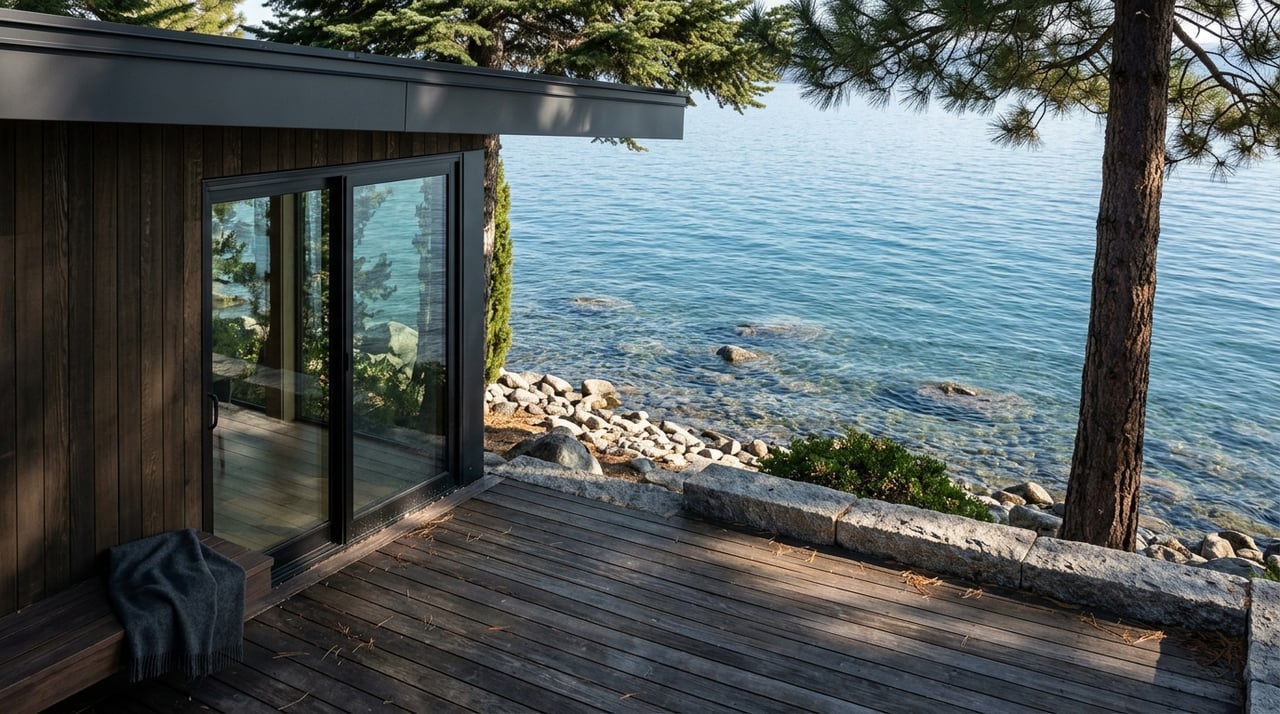
TRPA design standards encourage Old Tahoe and Historic Alpine character. That includes features like logs, board and batten, shiplap, subdued colors, gable, hip, and gambrel roofs, dormers, deep covered porches, and rock wainscoting.
For you as a buyer or owner, those standards help explain why so many West Shore homes feel grounded, familiar, and connected to place. The built environment leans toward classic cabins, summer homes, renovated lake houses, and low-rise mountain architecture rather than dense subdivision forms.
Stewardship Shapes Daily Life
West Shore living comes with a strong sense of stewardship. Land-coverage rules limit impervious surfaces, sensitive soils face development restrictions, and shoreline improvements are regulated through TRPA rules.
That can affect what is possible on a parcel, but it also helps preserve the setting that draws people here in the first place. The landscape, forest, lake clarity, and historic feel of the shoreline are not accidental. They are reinforced by ongoing planning and environmental oversight.
You also see that in local resilience work. Lake Tahoe West restoration spans 60,000 acres, Homewood has wildfire-evacuation planning underway, and Tahoma’s erosion-control project reflects active investment in runoff and water-quality improvements.
For many buyers and sellers, this is an important part of the West Shore story. Owning here often means thinking not just about the home itself, but also about access, land use, shoreline regulation, and long-term stewardship.
What Buyers Should Keep in Mind
If you are considering West Shore, it helps to think beyond the view and focus on how each area supports the lifestyle you want. A property near a village center may offer easier access to dining, transit, or recreation, while a more residential pocket may offer a quieter setting and a different sense of privacy.
It is also wise to evaluate the practical side of ownership early. Shoreline rules, land-coverage limits, design standards, and location-specific factors can all shape renovation plans, property use, and long-term value.
That is especially true in a place like West Shore, where the appeal is closely tied to constrained supply, environmental protections, and highly specific neighborhood character. Understanding those details can help you buy with more clarity or position a property more effectively if you plan to sell.
Why West Shore Stays Timeless
The classic West Shore Tahoe lifestyle is not about one feature alone. It comes from the way shoreline access, trail connection, seasonal recreation, and historic design all work together across a chain of small communities.
You get a part of Tahoe that still feels textured and place-driven. It can be social in one pocket, quiet in another, and deeply connected to the natural setting throughout.
If that balance is what you are looking for, West Shore continues to stand apart. And if you want guidance on how a specific property or neighborhood fits your goals, Team Blair Tahoe can help you navigate the market with local insight and Tahoe-specific expertise.
FAQs
What is West Shore Lake Tahoe?
- West Shore Lake Tahoe is a corridor of small communities along Highway 89 rather than one single town, including areas such as Sunnyside, Homewood, Tahoe Pines, and Tahoma.
How do people get around West Shore Lake Tahoe?
- West Shore is connected by the 12-mile Dianne Feinstein West Shore Tahoe Trail, the seasonal West Shore shuttle, and TART Connect evening service.
Where can you access the lake on West Shore?
- Key public access points include Commons Beach in Tahoe City and Sugar Pine Point State Park, which offers beach access, an accessible pier, and nearly 2 miles of lake frontage.
What makes West Shore homes feel classic?
- TRPA design standards encourage Old Tahoe and Historic Alpine features such as natural materials, subdued colors, deep porches, dormers, and traditional roof forms.
Are all West Shore communities the same?
- No. Sunnyside is more mixed-use and social, Tahoe Pines is more residential, Homewood is closely tied to ski access, and Tahoma offers a quieter south-end setting.
What should buyers know about West Shore property rules?
- Buyers should know that land coverage, sensitive soils, shoreline improvements, and some design elements are regulated, which can affect development, renovation, and long-term property planning.
 Explore Additional Insights and Articles