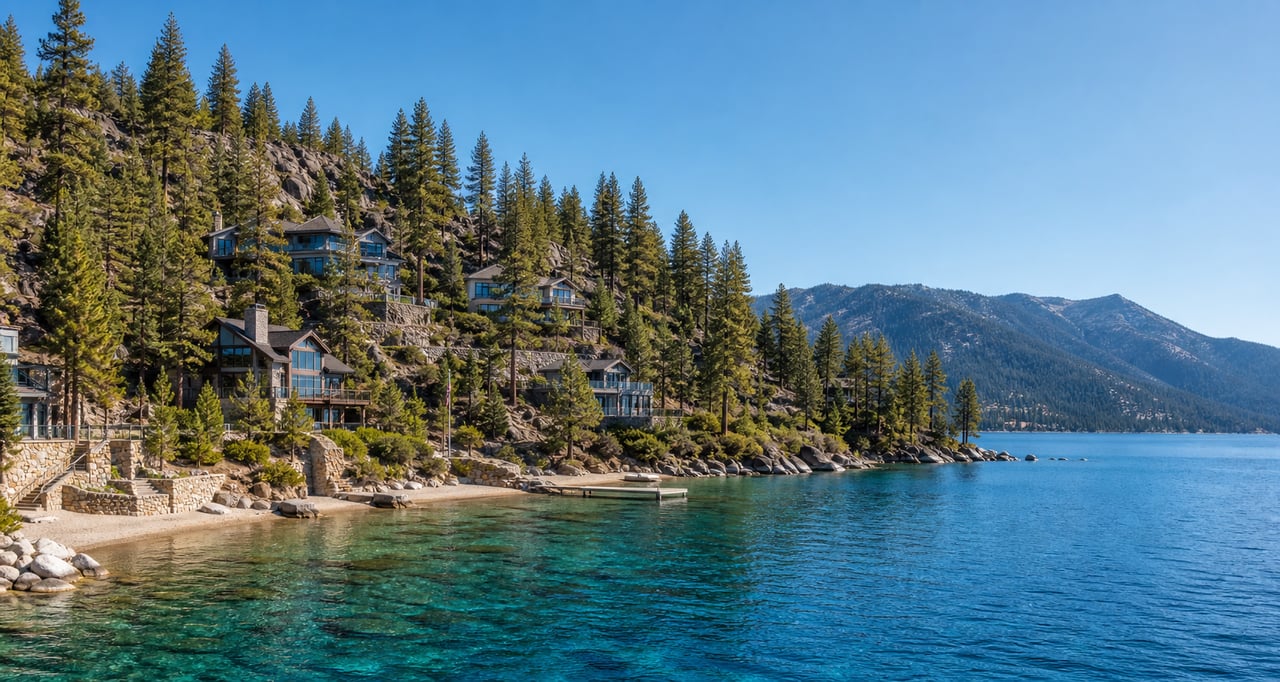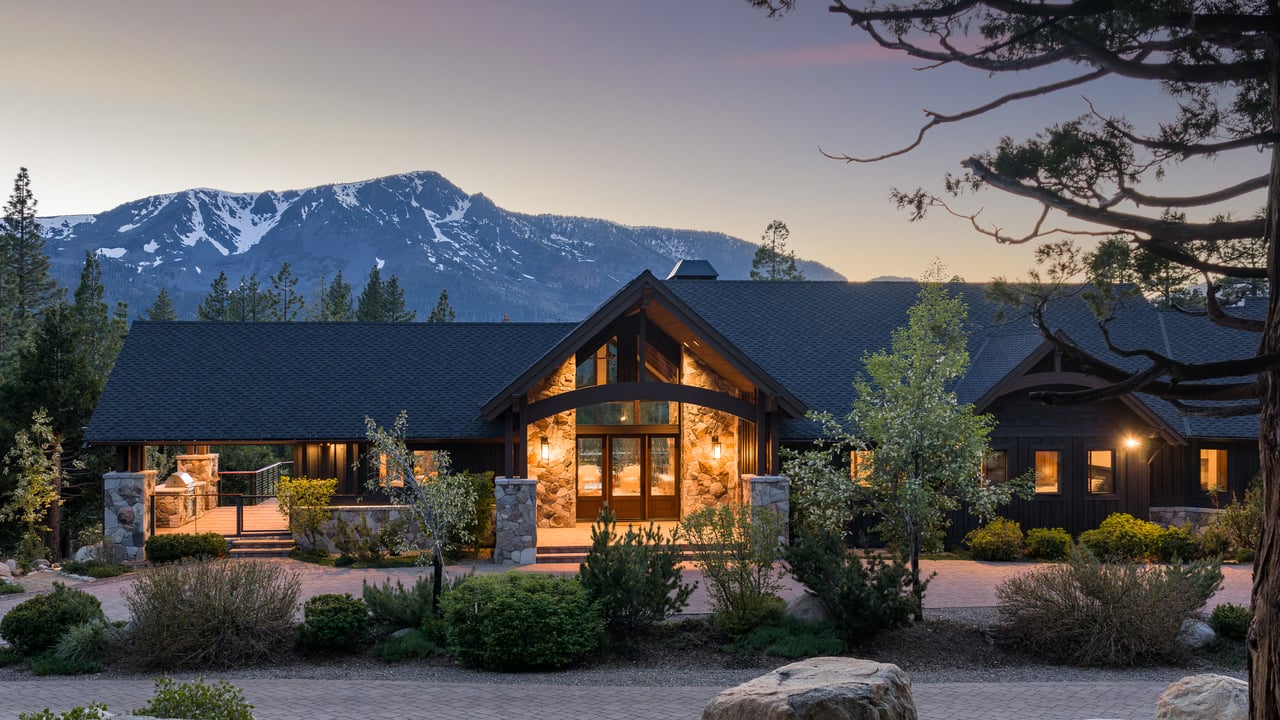
Buying a lakefront home at Lake Tahoe is as much about the shoreline as it is about the house.
The view may be what first draws you in, but the details that shape ownership are often less visible: whether a pier is private or shared, what mooring rights are documented, whether TRPA coverage has been verified, how the property handles drainage, and what can realistically be remodeled or expanded later.
Those questions do not make lakefront ownership less appealing. They help you understand what you are actually buying.
Lakefront Is Not One Category
A true lakefront property has direct frontage on Lake Tahoe, but two homes with similar views can offer very different ownership experiences.
One may have a private deep-water pier and permitted buoy. Another may share access through an association. A third may sit directly on the lake but have limited boating usability because of water depth, exposure, shoreline shape, or existing permits.
Before comparing finishes or square footage, establish the ownership structure:
Is the frontage private, shared, or association-controlled?
Are pier, buoy, boatlift, or slip rights included?
Are those rights documented and transferable?
Is access usable throughout the boating season?
Who maintains shared shoreline improvements?
Are there current permits, leases, fees, or use restrictions?
A listing description is a starting point. The supporting documents tell the fuller story.
Verify Piers, Buoys, and Boating Rights
A pier or buoy visible in a photograph should never be assumed to be permitted, exclusive, usable, or included in the sale.
Lake Tahoe shoreline improvements can involve TRPA, California or Nevada state agencies, local jurisdictions, and in some cases, federal review. Existing moorings must be properly permitted and registered, and state authorization may also apply because the lakebed is public land.
For a buyer, the practical questions are straightforward:
Which agency permits apply?
Is the pier or buoy assigned to this parcel?
Is the use private or shared?
Are annual registrations, leases, or fees current?
Has the seller received any notices or violations?
Can the rights transfer with the property?
Does the water depth work for the type of boat you plan to use?
A buyer should value the property based on the rights and improvements that exist today, not on an assumption that new infrastructure will be approved later.
Deep-Water Piers vs. Standard Piers
Not all piers function the same way.
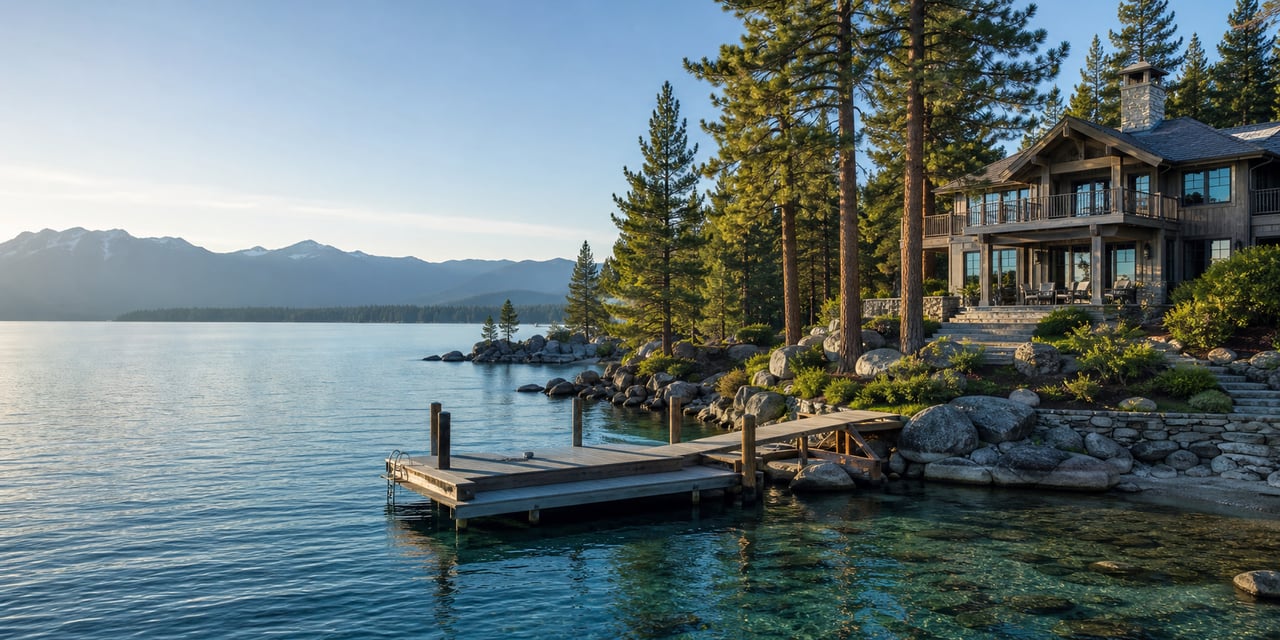
A deep-water pier can be a meaningful advantage because it may offer better usability as lake levels change and may support a broader range of boating needs. A standard pier, shallow-water pier, or seasonal setup may still be valuable, but the ownership experience can be different.
Before assuming a pier solves your boating needs, verify:
Water depth at typical lake levels
Whether the pier is usable throughout the boating season
Whether the pier works for the size and draft of your boat
Whether dredging, extensions, lifts, or changes would require approval
Whether the pier is private, shared, permitted, or subject to separate agreements
Maintenance history and expected future repair costs
A pier should be evaluated as infrastructure, not just scenery. The question is not only, “Does the property have a pier?” It is, “How does this pier actually function?”
TRPA Coverage Can Shape What You Can Do Later
For many Tahoe lakefront buyers, the biggest question is not only what exists today. It is what can be remodeled, expanded, rebuilt, or improved later.
That is where TRPA coverage becomes critical. Coverage generally refers to impervious or developed land coverage on a parcel, and it can affect what a buyer may be able to add, relocate, remove, or rebuild. A property may look like it has room for expansion, but the regulatory answer depends on verified coverage, land capability, existing improvements, and current TRPA rules.
If you are buying with future plans in mind, verify coverage early. Do not wait until after closing to learn whether a remodel, addition, garage expansion, lakeside improvement, or larger footprint is feasible.
A qualified Tahoe land-use planner can be especially valuable during due diligence. They can help interpret what exists now, what has been verified, what may need to be corrected, and what path may exist for future improvements.
Ask:
Has TRPA coverage been verified?
Are existing structures, driveways, patios, decks, paths, and hardscape documented?
Is there excess coverage?
Is there banked or transferable coverage?
Would a remodel, expansion, or rebuild require mitigation or redesign?
Are there open TRPA issues or unpermitted improvements?
Should a land-use planner review the parcel before contingency removal?
In Tahoe, “we can probably add on later” is not a strategy. Verify first.
Banked Coverage and Future Plans
If a buyer’s plans exceed the coverage available on a parcel, there may be ways to investigate additional options. In some cases, buyers may be able to purchase banked coverage from other parcels, subject to TRPA rules, availability, transfer requirements, and the specifics of the property.
This is not something to assume casually. Banked coverage, coverage transfers, and development rights can be technical, time-sensitive, and highly parcel-specific. The right consultant can help determine whether a buyer’s vision is realistic, what it may cost, and what approvals would be required.
If remodeling, expanding, or rebuilding is part of the reason you are buying the property, treat coverage as part of the purchase analysis, not a post-closing project.
Team Blair Tahoe can help buyers identify what needs to be investigated and connect them with experienced land-use planners, TRPA consultants, architects, and other local professionals who understand how these issues work in practice.
BMPs, Drainage, and Landscaping
Best Management Practices, or BMPs, are not optional background details in the Tahoe Basin. TRPA requires developed properties to install and maintain BMPs to help reduce erosion, manage stormwater, and protect Lake Tahoe’s water clarity.
For lakefront buyers, this matters because BMP compliance can affect landscaping, drainage, runoff control, gutters, infiltration systems, paved areas, and erosion prevention. In some cases, landscaping or drainage upgrades may be needed to bring a property into compliance.
Before removing contingencies, ask:
Does the property have a TRPA BMP Certificate?
If not, what work is required?
Are there drainage issues moving toward the lake?
Are gutters, infiltration trenches, gravel drip lines, rain gardens, or other BMP features installed and maintained?
Could landscaping, grading, or drainage upgrades be requested?
Who is responsible for completing required BMP work after closing?
BMPs may not be the most emotional part of buying lakefront, but they are part of responsible Tahoe ownership. They also help protect the lake itself, which is the reason the property is valuable in the first place.
How the Shoreline Actually Lives
Lakefront photographs are usually taken on a clear summer day. Ownership is year-round.
A thoughtful evaluation should include water depth, sun exposure, wind, privacy, winter access, maintenance, insurance, and wildfire risk.
Some stretches of shoreline are naturally shallow, rocky, or more exposed to wind and waves. Some homes receive generous afternoon sun, while others sit in deeper shade during parts of the year. Some feel private from the deck but sit near public beaches, recreation corridors, neighboring piers, or busy boating areas.
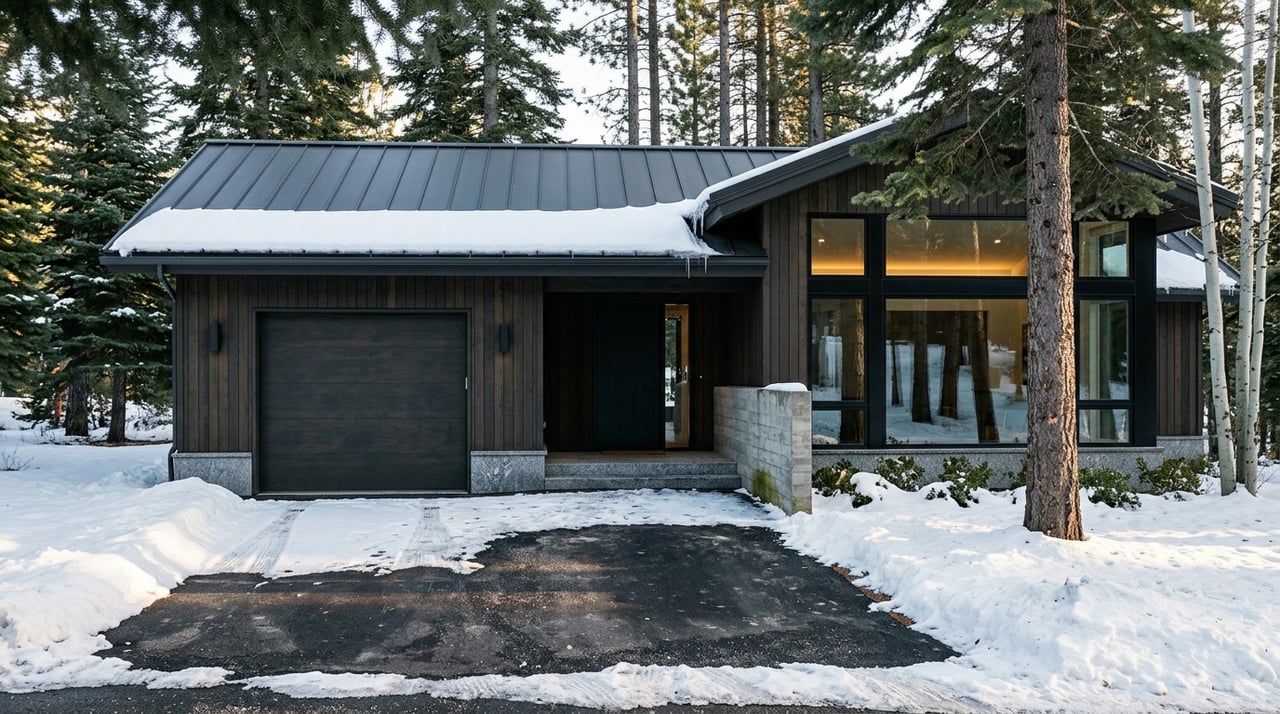
Winter matters too. Driveway grade, snow storage, roof shedding, private-road maintenance, and the distance from parking to the entry can matter as much as the floor plan.
Insurance should also be reviewed early. Availability, wildfire exposure, replacement cost, flood considerations, and second-home requirements can all affect the true cost of ownership.
Private, Shared, or Association Lakefront?
There is no universally better structure. The right fit depends on how you plan to use the property.
Private lakefront may appeal to a buyer who prioritizes control, privacy, direct access, and a long-term legacy property. It also places more responsibility for maintenance and permitting on the owner.
Shared or association lakefront can provide meaningful access with less direct upkeep. The tradeoff is that use may be governed by schedules, rules, guest policies, storage limits, or an association budget.
A lake-view home may be the better choice for a buyer who wants the setting and view while prioritizing privacy, easier maintenance, or a different price point over direct boat access.
Due Diligence Checklist
Before removing contingencies, buyers should consider confirming:
Recorded boundaries, easements, and shoreline rights
Pier, buoy, boatlift, slip, and boat-ramp permits
Deep-water pier vs. standard pier functionality
Water depth at the pier and buoy through changing lake levels
State leases or authorizations
Shared-use agreements and maintenance obligations
HOA rules, budgets, reserves, and guest policies
TRPA parcel records and prior approvals
TRPA coverage verification and land capability review
Existing, banked, and transferable coverage records
Whether additional banked coverage may be available if plans exceed current allocations
Land-use planner review if remodeling, expansion, or rebuilding is part of the plan
Open permits, violations, or unpermitted work
BMP Certificate or required BMP work
Drainage, erosion, landscaping, and stormwater compliance
Utility systems and backup systems
Insurance availability and estimated premiums
Wildfire defensible-space obligations
Snow removal and winter access
Planned projects that could affect views, privacy, or shoreline use
The goal is not to make the process feel complicated. It is to make the ownership experience predictable.
The Team Blair Perspective
The best lakefront purchase is not always the property with the longest amenity list. It is the one whose rights, setting, usability, and maintenance profile match the way you want to live.
Some buyers care most about boating. Others want a quiet shoreline, room for generations to gather, or a home they can use comfortably through winter. Some are buying for what exists today, while others are buying with a remodel or legacy plan in mind.
Those are very different searches.
Team Blair Tahoe helps buyers compare the visible qualities of a home with the less visible details that matter after closing: shoreline rights, pier function, TRPA coverage, BMP compliance, insurance, access, and long-term stewardship.
Just as important, we help buyers know which questions to ask and which local consultants to bring in. For lakefront property, that can include land-use planners, TRPA consultants, pier and buoy specialists, architects, insurance advisors, inspectors, and other professionals who can help clarify what is possible before a buyer commits.
Frequently Asked Questions
Does every Lake Tahoe lakefront home include a private pier?
No. A property may have a private pier, shared pier, association access, or no pier at all. Confirm the recorded rights and current permits for the specific parcel.
Why does TRPA coverage matter when buying lakefront?
Coverage can affect what can be remodeled, expanded, rebuilt, or added later. Buyers with future plans should verify coverage and consider a land-use planner review during due diligence.
Can a buyer purchase additional coverage?
In some cases, buyers may be able to purchase banked coverage from other parcels, subject to availability, TRPA rules, and parcel-specific requirements. This should be reviewed with a qualified land-use planner or consultant.
Can a buyer add a new pier after purchasing?
Possibly, but new piers are subject to eligibility, limited allocations, agency review, design standards, timing, and approval. Do not base a purchase decision on an unverified future pier.
Does a buoy automatically transfer with the home?
Not necessarily. Confirm that the mooring is permitted, registered, connected to the parcel, and transferable. State authorization may also apply.
What is the difference between a deep-water pier and a standard pier?
A deep-water pier may offer better boating usability as lake levels change. A standard or shallow-water pier may still be valuable, but buyers should verify water depth, seasonal use, and suitability for their boat.
What are BMPs?
BMPs are stormwater and erosion-control measures required by TRPA for developed properties. They help reduce sediment and pollutants from reaching Lake Tahoe and may involve drainage, landscaping, gutters, infiltration systems, or erosion-control upgrades.
Which consultants should a lakefront buyer consider?
Depending on the property, a buyer may benefit from a land-use planner, TRPA consultant, pier or buoy specialist, surveyor, architect, insurance advisor, and inspectors familiar with Tahoe lakefront homes.
Ready to Compare Lakefront Options?
If you are considering a Lake Tahoe lakefront home, Team Blair Tahoe can help you evaluate the property, the shoreline, and the ownership structure together. We can also help identify what needs further review and connect you with trusted local consultants so you can understand the property before you commit.
Editorial/source links: TRPA Applications & Forms, TRPA Stormwater & BMPs, TRPA Pier Allocations, TRPA Shoreline Program
 Explore Additional Insights and Articles